Wire Rope, Rigging & Lifting Solutions for Australian Industry

Call us today for more information

02 9631 8833

sales@lbwireropes.com.au

Wire Rope, Slings and Fittings

Wire Rope, Slings and Fittings

Australian-Manufactured Wire Rope Slings and Assemblies

LB Wire Ropes supplies a comprehensive range of wire rope, wire rope slings, fittings and terminations for lifting, materials handling and specialised industrial applications.

Established in 1962, LB Wire Ropes has decades of experience selecting, fabricating, testing and supplying wire rope assemblies for Australian industry. Our capabilities include standard and custom-manufactured wire rope slings with hand-spliced or machine-spliced eyes, tapered ends, swage sockets and chemically set sockets.

With access to a broad range of wire rope constructions, finishes and fittings, our experienced technical team can assist in selecting an assembly suited to the load, operating environment and intended application.

Wire Rope Slings Manufactured in Australia

Wire rope slings remain an important lifting solution for heavy-duty and demanding applications where strength, durability, abrasion resistance and tolerance of harsh operating environments are required.

LB Wire Ropes manufactures wire rope slings at our Western Sydney facility, including standard configurations and custom assemblies produced to suit specific lifting and handling requirements.

Available configurations include:

  • single-leg wire rope slings;
  • multi-leg wire rope slings;
  • hand-spliced eye slings;
  • machine-spliced eye slings;
  • soft eyes and thimble eyes;
  • socketed wire rope assemblies;
  • endless and grommet slings;
  • tapered and specialised terminations;
  • custom assemblies manufactured to specification.

This section should be supported by genuine photography showing your team splicing, pressing, socketing or testing completed assemblies.

Wire Rope for Industrial Applications

Wire rope is available in a wide range of constructions, grades, finishes and core types. Each construction has different characteristics affecting flexibility, breaking strength, resistance to crushing, fatigue performance, rotation and abrasion.

LB Wire Ropes supplies wire rope for applications including:

  • cranes and winches;
  • lifting and materials handling;
  • mining and quarrying;
  • marine and shipping;
  • general engineering;
  • structural and architectural applications;
  • irrigation systems;
  • fishing and aquaculture;
  • elevators and ropeways;
  • gondola and swinging stage;
  • conveyor and tensioning systems.

Wire rope is available in black, galvanised and stainless-steel finishes, depending on the construction and application.

Wire Rope Sling and Assembly Types

Machine-Spliced Wire Rope Slings

Machine-spliced slings are manufactured by forming the wire rope eye and securing it using an appropriately matched ferrule. They provide a consistent and efficient termination for a broad range of lifting and industrial applications.

Slings may be manufactured with soft eyes, thimble eyes or compatible lifting fittings.

Hand-Spliced Wire Rope Slings

Hand-spliced slings are formed by splicing the rope strands back into the body of the rope. This method may be appropriate for particular rope constructions, assembly types or applications where machine splicing is unsuitable.

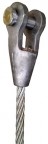
Socketed Wire Rope Assemblies

Socket terminations provide a high-efficiency connection for applications requiring a strong, compact and durable wire rope termination.

Available options include:

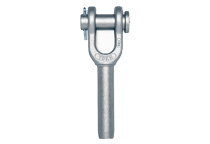
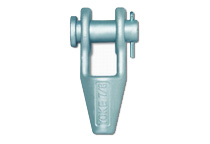
  • open and closed swage sockets;
  • open and closed spelter sockets;
  • chemically set sockets;
  • specialised socket configurations.

The correct socket and termination method must be matched to the wire rope construction, diameter and application.

Endless and Grommet Slings

Endless wire rope slings and cable-laid grommets provide versatile lifting arrangements for heavy or irregular loads. Their continuous construction permits the bearing points to be varied, helping distribute wear over the assembly.

Tapered and Specialised Assemblies

Tapered wire rope ends and other specialised terminations may be manufactured for pulling, reeving, installation and maintenance applications.

Wire Rope Fittings and Terminations

LB Wire Ropes supplies fittings for the manufacture, termination and connection of wire rope assemblies.

The range includes:

  • swage sleeves;
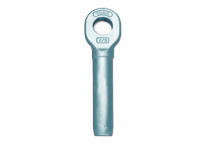
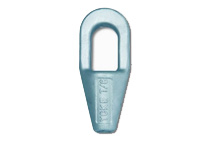
  • wire rope sockets;
  • thimbles;
  • rope grips;
  • shackles;
  • turnbuckles and rigging screws;
  • swivels;
  • links and lifting components;
  • eye bolts and eye nuts;
  • specialised wire rope fittings.

Fittings must be selected to suit the wire rope diameter, construction, required capacity and method of termination. Components should not be substituted solely because they appear physically compatible.

Selecting the Right Wire Rope or Sling

Selecting the correct wire rope assembly requires more than matching a rope diameter to a load.

Key considerations include:

  • intended application;
  • load weight and centre of gravity;
  • required Working Load Limit;
  • sling configuration and angle;
  • wire rope construction;
  • rope grade and diameter;
  • fibre or steel core;
  • bending fatigue requirements;
  • resistance to abrasion or crushing;
  • environmental exposure;
  • operating temperature;
  • end termination;
  • connection points;
  • inspection and certification requirements.

Where the application involves repeated bending over drums or sheaves, the rope construction and sheave dimensions are particularly important. A rope suitable for a static assembly may not provide acceptable service life in a dynamic crane or winch application.

Our technical team can review the operating requirements and assist with selecting an appropriate wire rope, sling construction and termination method.

Working Load Limits and Sling Angles

The capacity of a wire rope sling depends on its construction, rope diameter, termination efficiency, sling configuration and the angle at which it is used.

As the angle between sling legs increases, the force carried by each sling leg also increases. The marked Working Load Limit must therefore be considered together with the actual lifting arrangement.

Customers should confirm:

  • the weight and stability of the load;
  • the number of sling legs carrying the load;
  • the angle of each sling leg;
  • the condition of the connection points;
  • whether bending, choking or other capacity-reducing factors apply;
  • that the assembly is appropriate for the intended lift.

A sling should not be selected solely on the nominal breaking strength of the wire rope from which it is manufactured.

Inspection and Safe Use

Wire rope slings and assemblies should be inspected before use and periodically inspected by a competent person in accordance with the applicable requirements, the operating conditions and the manufacturer’s guidance.

Inspection should consider:

  • broken wires;
  • corrosion;
  • abrasion and mechanical damage;
  • kinks, birdcaging or distortion;
  • crushing or reduction in rope diameter;
  • heat or chemical damage;
  • damaged eyes, thimbles or fittings;
  • movement or damage at terminations;
  • legible identification and certification;
  • any condition that may reduce the assembly’s strength or safe operation.

Equipment showing significant wear, deformation, damage or loss of identification should be removed from service and assessed before further use.

The wording should remain high-level here. Detailed discard criteria are better placed in a dedicated inspection resource or product-specific technical guidance.

Testing and Certification

Where required, LB Wire Ropes can manufacture, test and certify wire rope slings and assemblies in accordance with the applicable product requirements and customer specification.

Testing and documentation may include:

  • proof-load testing;
  • assembly identification;
  • test certificates;
  • traceability records;
  • inspection documentation;
  • customer-specific certification requirements.

The exact test and certification requirements should be confirmed when the assembly is ordered.

Only include this section to the extent that each service reflects your actual facilities, scope and documented processes.

Common Applications

Wire rope, slings and fitted assemblies are used throughout:

Crane and Lifting Operations

For lifting machinery, fabricated components, structural steel and heavy industrial equipment.

Mining and Quarrying

For lifting, hauling, tensioning and maintenance activities in demanding operating environments.

Marine and Shipping

For lifting, towing, mooring and materials-handling applications requiring durable rope assemblies.

Construction and Infrastructure

For lifting, installation, temporary works and specialised project requirements.

Manufacturing and Engineering

For production lifting, machinery handling and purpose-designed equipment assemblies.

Winches and Mechanical Systems

For applications involving drums, sheaves, reeving systems, pulling and controlled movement.

Why Choose LB Wire Ropes?

  • Established in 1962
  • Australian wire rope sling manufacturing
  • Experienced hand and machine splicing capability
  • Swaged and chemically set socket terminations
  • Standard and custom-manufactured assemblies
  • Wire rope selection and application advice
  • Testing and certification capability
  • Broad range of wire rope and lifting fittings
  • Support for lifting, crane, mining, marine and industrial applications

Frequently Asked Questions

What is a wire rope sling?

A wire rope sling is a lifting assembly manufactured from wire rope and fitted with eyes, sockets or other end connections. It may be produced as a single-leg, multi-leg, endless or specialised sling.

Are wire rope slings manufactured in Australia?

Yes. LB Wire Ropes manufactures standard and custom wire rope slings and assemblies at its Western Sydney facility.

What is the difference between a hand splice and a machine splice?

A hand splice is formed by splicing the rope strands into the body of the rope. A machine splice forms the eye using a ferrule swaged around the rope. The appropriate method depends on the rope, assembly design and application.

Can you manufacture a wire rope sling to a specific length?

Yes. Wire rope slings and assemblies can be manufactured to specified lengths, configurations and end fittings, subject to the technical requirements of the application.

Can wire rope slings be proof tested?

Wire rope slings can be proof-load tested and supplied with documentation where this is required and appropriate for the assembly.

How do I select the correct wire rope construction?

Selection depends on factors including load, flexibility, abrasion, crushing, bending fatigue, rotation, drum and sheave design, operating environment and required service life.

How often should a wire rope sling be inspected?

Slings should be visually checked before use and periodically inspected by a competent person. The inspection frequency depends on usage, operating conditions, risk and applicable requirements.

Can damaged wire rope slings be repaired?

Some fittings or assemblies may be capable of assessment or re-termination, but a damaged sling must be removed from service and evaluated before any repair or continued use is considered.

Talk to Our Technical Team

Need assistance selecting wire rope, fittings or a wire rope sling?

Our experienced technical team can assist with wire rope selection, sling design, termination options, testing requirements and quotations for standard or custom-manufactured assemblies.

Parafit


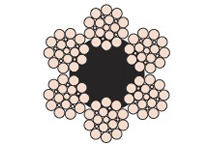
Properties Applications Boom hoist rope for a...

More

Eurolift


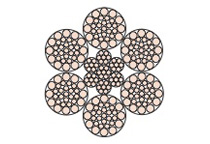
Properties Applications Casar Eurolift has a ...

More